Jet charter Harry Reid Airport
Jet charter Harry Reid starts with one number: 2 miles to the Strip. LAS sits at 2,181 feet and handles private flights through two FBOs. This guide covers runways, ramps, summer heat, and Hawaii legs.
- KLAS · LASairport codes
- 2,181 ftfield elevation
- 14,835 ftlongest runway
- 0 mito Los Angeles
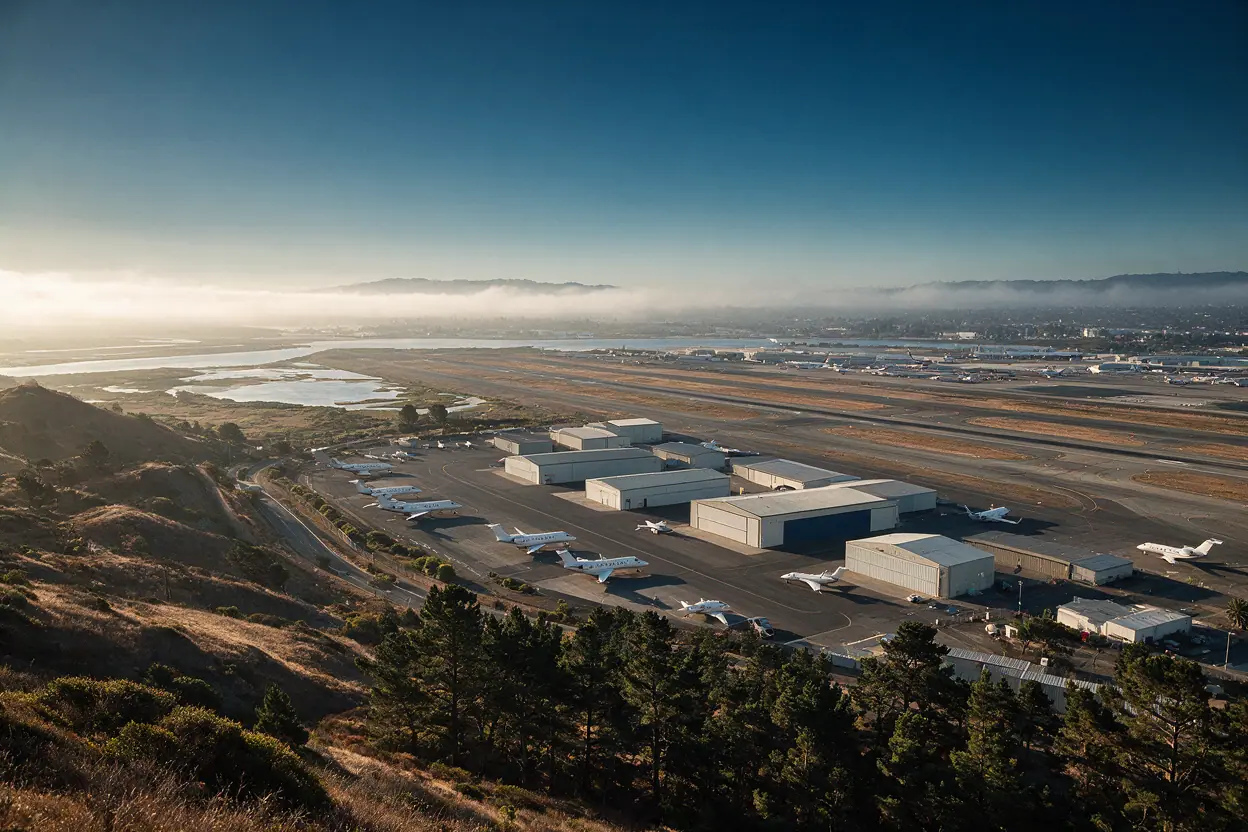
Jet charter Harry Reid begins with the airport's own numbers. Harry Reid International (KLAS) sits 2,181 feet above sea level, just 2 miles from the Las Vegas Strip, which makes it one of the few major US airports where a private arrival puts you minutes from the hotel. Private jets at Harry Reid use the same field as the airlines, so slot timing and ramp choice matter. The local code is LAS and the airport is a designated port of entry, useful when a Hawaii itinerary involves a neighbor island return.
The field carries a 14,835-foot longest runway, long enough that takeoff performance is rarely the limiting factor even in July heat. Two FBOs, Atlantic Aviation and Signature Aviation, handle the general aviation side of Harry Reid. Charter flights here are arranged through brokers like us and flown by FAA Part 135 operators who hold operational control; we book the trip, they fly it. Under DOT Part 295 rules a broker acts as your agent, not the airline.
Most travelers asking about private jets at LAS are weighing two things: how fast they can reach the Strip, and whether a Las Vegas stop fits a longer private jet to Hawaii itinerary. A jet charter Harry Reid booking is often the first leg of a Hawaii trip, not the whole trip. Convention weeks and fight nights tighten ramp space and crew hotel availability, so early planning pays off.
Empty leg flights out of LAS do appear, usually on repositioning runs back toward California or the Northwest. They can cut the cost of a one-way, but the schedule is set by someone else's trip and cancellations are common. If your dates are fixed, a standard charter quote is the more reliable path.
Runways and field performance at LAS
Harry Reid's longest runway measures 14,835 feet, so heavy long-range aircraft depart comfortably even on hot afternoons. A 14,835-foot runway at 2,181 feet elevation gives Gulfstreams and Globals room to spare. Crosswind runway combinations exist, and tower sequencing keeps airline traffic separated from general aviation arrivals. When summer heat builds, crews compute density altitude before accepting a full fuel load, and a heavy departure may still need a payload or fuel trade.
| Runway | Run | Width | Surface |
|---|---|---|---|
| 08L/26R | 14,835 ft | 150 ft | Asphalt |
| 08R/26L | 10,526 ft | 150 ft | Asphalt |
| 01L/19R | 9,770 ft | 150 ft | Concrete |
| 01R/19L | 9,769 ft | 150 ft | Asphalt |
FBOs and ground handling
Two FBOs serve general aviation at Harry Reid: Atlantic Aviation and Signature Aviation. Both handle private jets and turboprop arrivals, with ramp parking, fuel, and lounge space for passengers. Atlantic Aviation and Signature Aviation are the two FBOs at Harry Reid, and both accept transient jets. Which one your operator uses depends on hangar space, fuel contracts, and the day's traffic.
Ground time to the Strip runs short from either ramp, though the 2-mile figure is airport-to-Strip as the crow flies. Actual drive time depends on the hour and the show schedule. If you are connecting to a Hawaii departure, plan for CBP clearance when the itinerary touches an international point; the airport is a port of entry, but clearing customs takes time out of your day.
When Harry Reid makes sense
- Arrivals tied to the Strip, conventions, and fight nights, where 2 miles to the Strip beats a remote field.
- Hawaii itineraries that start with a Las Vegas stop before the long overwater leg.
- Long-range jets needing a 14,835-foot runway for hot-day departures with full tanks.
- Travelers who want a port of entry on the field for international connections.
| Class | Typical runway need | Here |
|---|---|---|
| Turboprop | 3,300 ft+ | Fits |
| Light jet | 4,000 ft+ | Fits |
| Midsize jet | 5,000 ft+ | Fits |
| Super-midsize jet | 5,200 ft+ | Fits |
| Heavy jet | 5,600 ft+ | Fits |
Heat and density altitude by season
July averages a 5,800-foot density altitude at Harry Reid, and a 115F afternoon pushes it to roughly 6,300 feet. Summer density altitude near 6,300 feet at LAS changes takeoff weights on charter jets. Crews plan around it rather than fighting it.
The swing across the year is wide. January and December sit near 2,600 feet, April near 4,100 feet, and June jumps to 5,500 feet before the July peak. Wet days are few, with July and August seeing about 2 each, though monsoon storms can still close ramps briefly. If you are flying a turboprop or a light jet, then a midday July departure may need a fuel stop where a winter flight would not.
| Month | Avg high | Wet days | Density altitude |
|---|---|---|---|
| Jan | 57°F | 4 | 2,600 ft |
| Feb | 63°F | 3 | 3,000 ft |
| Mar | 70°F | 4 | 3,400 ft |
| Apr | 80°F | 2 | 4,100 ft |
| May | 87°F | 1 | 4,600 ft |
| Jun | 101°F | 0 | 5,500 ft |
| Jul | 105°F | 2 | 5,800 ft |
| Aug | 103°F | 2 | 5,600 ft |
| Sep | 95°F | 1 | 5,100 ft |
| Oct | 81°F | 2 | 4,200 ft |
| Nov | 66°F | 1 | 3,200 ft |
| Dec | 57°F | 2 | 2,600 ft |
Getting to and from the airport
The airport sits 2 miles from the Strip, with the rental car center and rideshare pickup a short drive from either FBO. A Harry Reid arrival puts the Strip 2 miles away, so the transfer is quick outside peak hours. If your flight lands during a major convention or a Saturday night, then allow extra time for the last mile. For comparison, Van Nuys is 229 miles away and San Francisco International 411 miles, both better choices for California departures than routing through LAS.
Private jet routes via Harry Reid
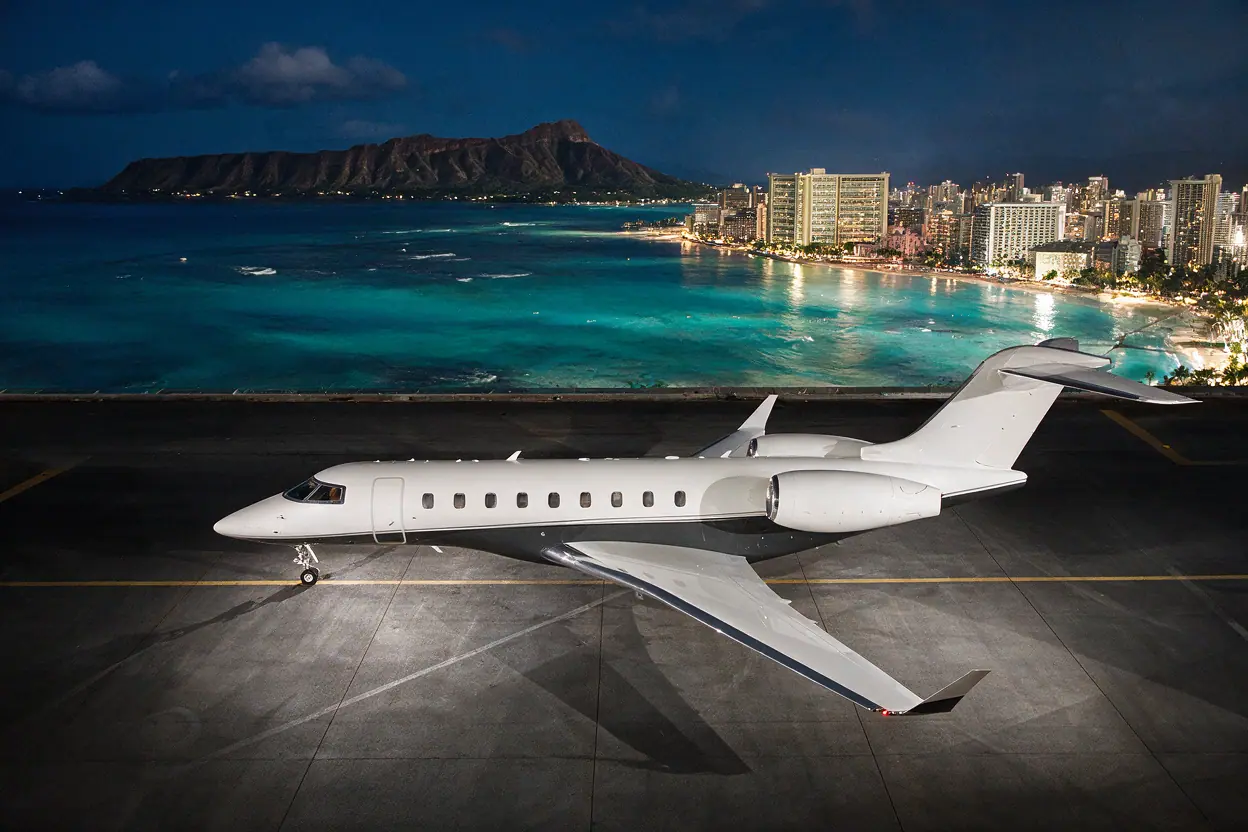
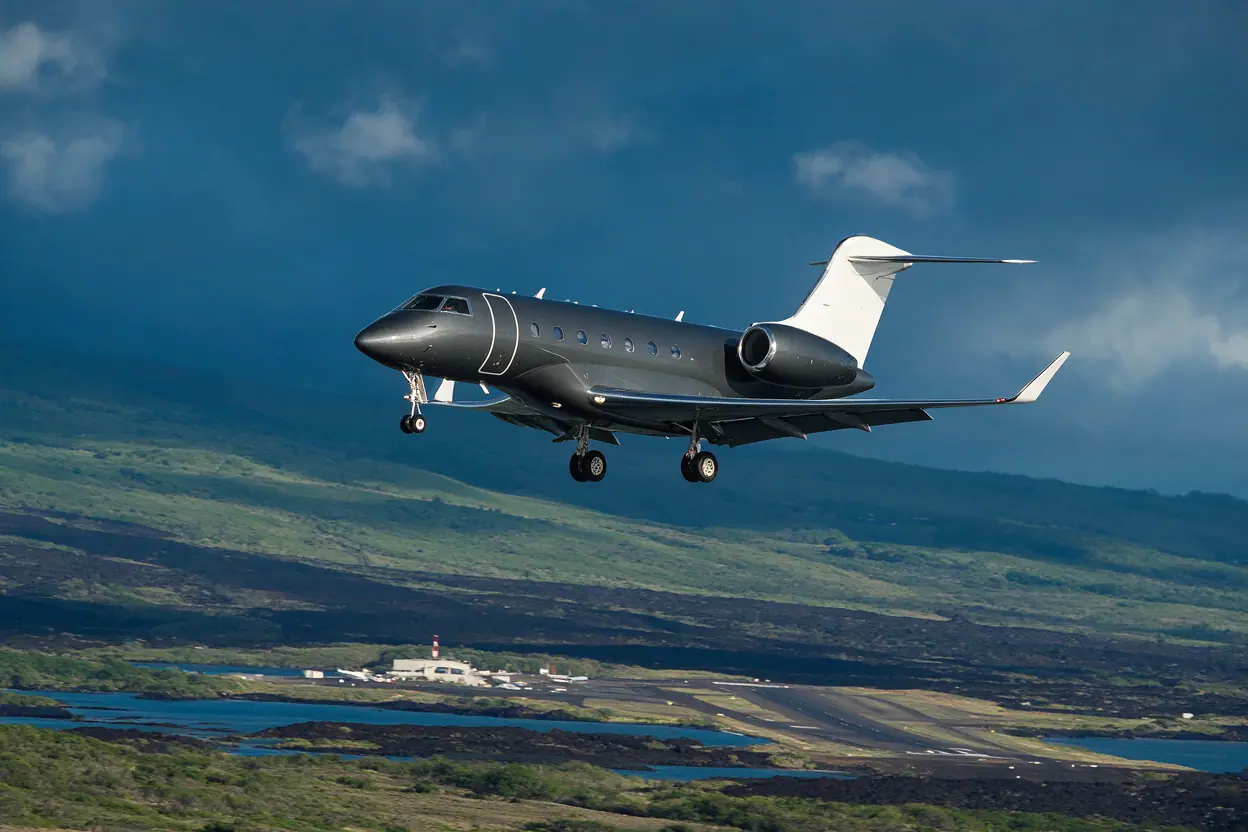
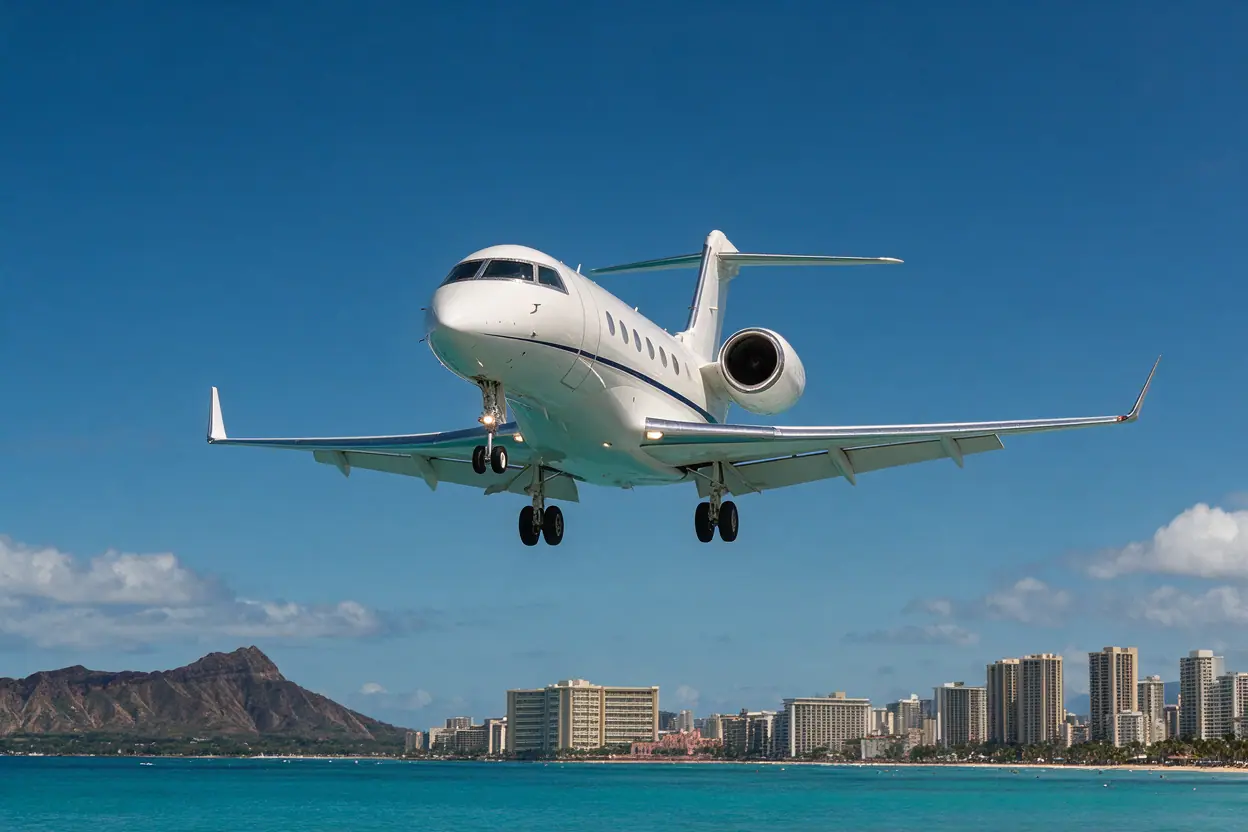
Across these 6 private jet routes, distances span 2,031 to 2,329 nautical miles, and one-way light jet estimates range from $23,000 to $39,000.
Inquiries on this airport
How far is jet charter Harry Reid from the Las Vegas Strip?
Harry Reid International Airport is 2 miles from the Strip, measured airport to Strip. Drive time depends on traffic and event schedules, but the transfer is short by any standard. The airport sits at 2,181 feet elevation, which matters more for aircraft performance than for your ground transfer.
What is the longest runway at Harry Reid?
The longest runway measures 14,835 feet, the field's headline figure for long-range departures. That length means a Gulfstream or Global can usually depart with full fuel even on a hot July afternoon, when density altitude reaches about 5,800 feet. In cooler months the margin grows considerably.
Which FBOs handle private jets at LAS?
Two FBOs serve general aviation: Atlantic Aviation and Signature Aviation. Your operator picks one based on hangar space, fuel agreements, and ramp availability that day. Both handle jets and turboprops. Ramp space tightens during convention weeks and major events, so book early if your dates are fixed.
How hot does it get, and does heat affect flights?
July highs average 105F, with a density altitude near 5,800 feet; a 115F afternoon reaches about 6,300 feet. That thinner air reduces takeoff performance, so crews may trade fuel or payload. January and December are far easier, with density altitude around 2,600 feet. June and August sit between those extremes.
Who operates the aircraft on a charter booked here?
Flights are flown by FAA Part 135 operators who hold operational control of the aircraft; we arrange the trip as your agent under DOT Part 295 rules and do not own the planes. That distinction matters if anything changes on the day, because the operator, not the broker, makes the operational call.
Can I fly private from Harry Reid to Hawaii?
Yes, and it is a common pairing. A Las Vegas stop before the overwater leg works well, and the 14,835-foot runway supports long-range jets with full fuel. Honolulu is 2,759 miles from LAS and Kahului 2,692 miles, distances that favor a mid-size or larger jet. Costs are estimates and vary by aircraft and date.