Private jet Ellison Onizuka Kona at Keāhole
Kona's field sits low and warm on the west coast. The runway runs 11,000 feet at just 47 feet elevation. Charter flights land here year-round, from island turboprops to mainland Gulfstreams.
- PHKO · KOAairport codes
- 47 ftfield elevation
- 11,000 ftlongest runway
- 0 mito Los Angeles

A private jet Ellison Onizuka Kona at Keāhole arrives at an airport built for long-haul arrivals. The field sits 47 feet above sea level, the runway runs 11,000 feet, and that combination means heavy jets land with room to spare even on a hot afternoon. Kailua and Kona arrivals use KOA because the runway absorbs heat and weight well. The field is named for Hawaii-born astronaut Ellison Onizuka, and locals still call the surrounding area Keāhole after the old fishing village site.
For mainland travelers, distance is the number that drives the trip. The field is about 2,714 miles from the mainland gateways that feed it, which puts Kona in range of midsize and large-cabin jets flying nonstop from California. Van Nuys sits roughly 2,229 miles out; San Francisco is closer. Pilots plan fuel and payload around those legs, and the airport's length means a loaded jet does not need a tech stop the way a shorter Big Island strip might force.
The airport code question comes up often. KOA is the IATA code, PHKO the ICAO code, and both appear on flight plans and charter quotes for the same field. The KOA international airport website lists the field as Kona International at Keāhole, and the airport master plan documents cover the terminal and airfield changes in progress. For a charter comparison, the code matters less than what the runway and the single FBO can actually do for your aircraft.
Kona is the leeward side of the Big Island, and that matters for weather. The field is dry compared with Hilo, which sits on the windward coast and collects the rain. Charter routes to Hawaii often split between KOA and HNL or OGG, and Kona's advantage is that it puts you on the sunny coast near the resorts rather than a two-hour drive away.
What runway length means for your jet
An 11,000-foot runway at 47 feet elevation is a generous combination, and it is the reason large-cabin jets can fly nonstop from the West Coast into Kona without payload penalties. Runway 17/35 is the main strip, and its length gives crews margin for a rejected takeoff and for landing rollout with heavy fuel. The field handles commercial widebodies daily, so the pavement and approach infrastructure are built for serious aircraft, not just turboprops. For a charter operator planning a Kona leg, the practical effect is that midsize jets and above have room to work, and the deciding factor shifts from runway length to ramp space and slot timing.
| Runway | Run | Width | Surface |
|---|---|---|---|
| 17/35 | 11,000 ft | 150 ft | Asphalt |
FBOs and ground handling at KOA
Atlantic Aviation is the fixed base operator on the field, and it handles the general aviation traffic that private jet Ellison Onizuka Kona at Keāhole flights depend on. Arrival and departure handling, fuel, and ground coordination run through that single FBO, so your charter operator will confirm ramp availability before the trip is booked. The airport also sees heavy commercial traffic, which means ground movement is coordinated with the airlines rather than free-flowing at all hours.
Because there is one FBO, peak periods can stack up. If several jets request the same arrival window, then the ramp and customs timing can tighten, so booking early in a busy week matters more here than at a multi-FBO mainland field. Your operator and the FBO work out parking, and for international arrivals, CBP processing is arranged in advance.
When Kona is the right airport
- Travelers heading to the Kona and Kohala coast resorts, who avoid the long drive from Hilo.
- Groups flying nonstop from California on midsize or large-cabin jets that need the 11,000-foot runway.
- Island-hopping itineraries that pair Kona with Maui or Honolulu on the same trip.
- Winter travelers who want the dry leeward coast when the windward side is wet.
| Class | Typical runway need | Here |
|---|---|---|
| Turboprop | 3,300 ft+ | Fits |
| Light jet | 4,000 ft+ | Fits |
| Midsize jet | 5,000 ft+ | Fits |
| Super-midsize jet | 5,200 ft+ | Fits |
| Heavy jet | 5,600 ft+ | Fits |
Weather and density altitude by season
Density altitude at KOA peaks around 2,900 feet at 115F, and in July it runs near 2,300 feet, which is mild for a field so close to the equator. The low 47-foot elevation keeps Kona's density altitude modest even in the warm months, so performance is rarely the constraint that it is at high-desert airports. Summer highs reach 92F in July and 93F in August, with almost no rain; winter highs drop to the mid-60s with a handful of wet days each month.
The trade-off is that warm, humid air still affects turboprops and light jets more than large cabins. If you are flying a light jet or turboprop to Kona in August, then plan for reduced climb performance on departure. Larger aircraft barely notice. Rain is sparse on this coast from June through September, and the wetter months are December through March, when a few days each month see showers.
| Month | Avg high | Wet days | Density altitude |
|---|---|---|---|
| Jan | 65°F | 5 | 500 ft |
| Feb | 68°F | 5 | 700 ft |
| Mar | 69°F | 7 | 700 ft |
| Apr | 76°F | 3 | 1,200 ft |
| May | 77°F | 2 | 1,300 ft |
| Jun | 85°F | 0 | 1,800 ft |
| Jul | 92°F | 0 | 2,300 ft |
| Aug | 93°F | 1 | 2,300 ft |
| Sep | 89°F | 2 | 2,100 ft |
| Oct | 84°F | 2 | 1,700 ft |
| Nov | 74°F | 2 | 1,100 ft |
| Dec | 66°F | 5 | 500 ft |
Getting from the airport to the coast
The airport sits on the Keāhole coast just north of Kailua-Kona, and the drive south on Highway 19 reaches the town in a short run. From KOA, the resorts of the Kohala coast sit to the north on Highway 19, while Kailua-Kona and the snorkeling beaches at Kealakekua lie to the south. Rental cars, rideshares, and prearranged transfers are the usual options, and your charter operator can arrange a car to meet the aircraft. The field is compact enough that the walk from the FBO to the curb is quick.
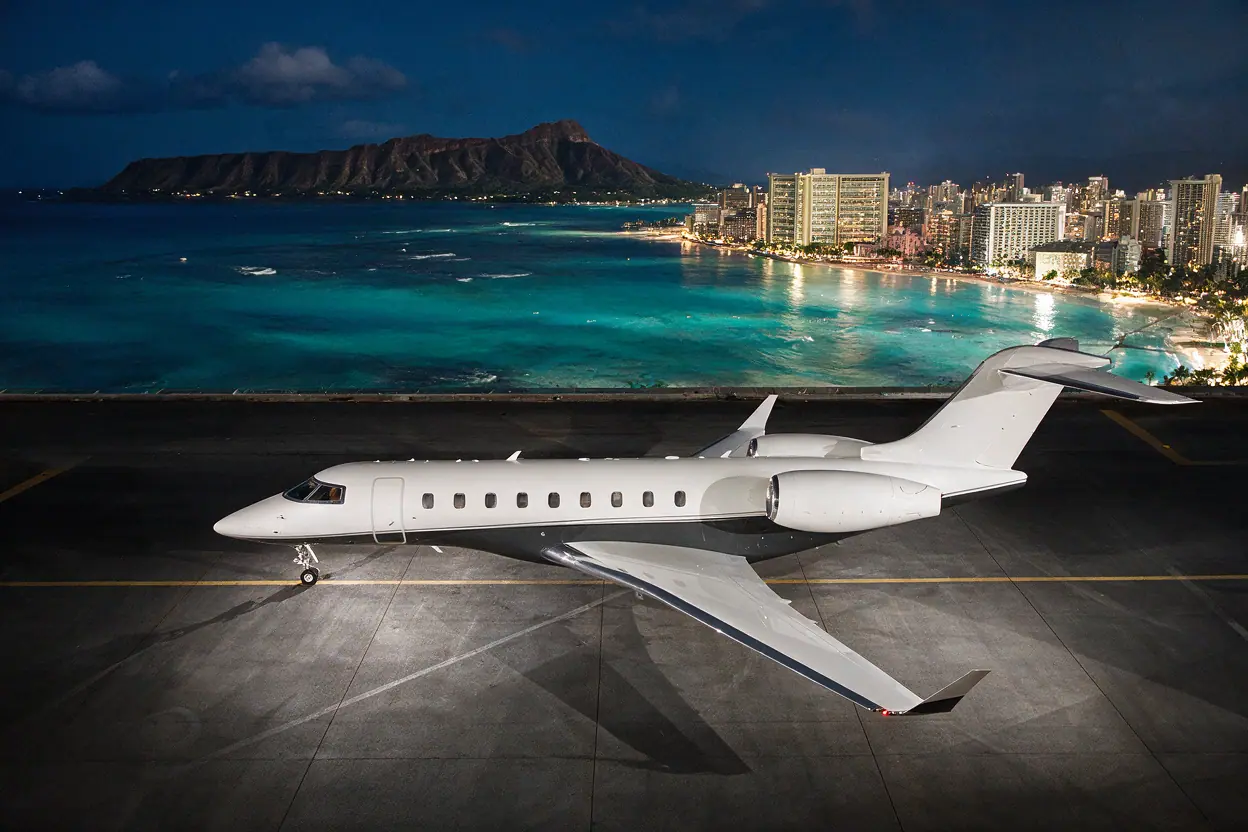
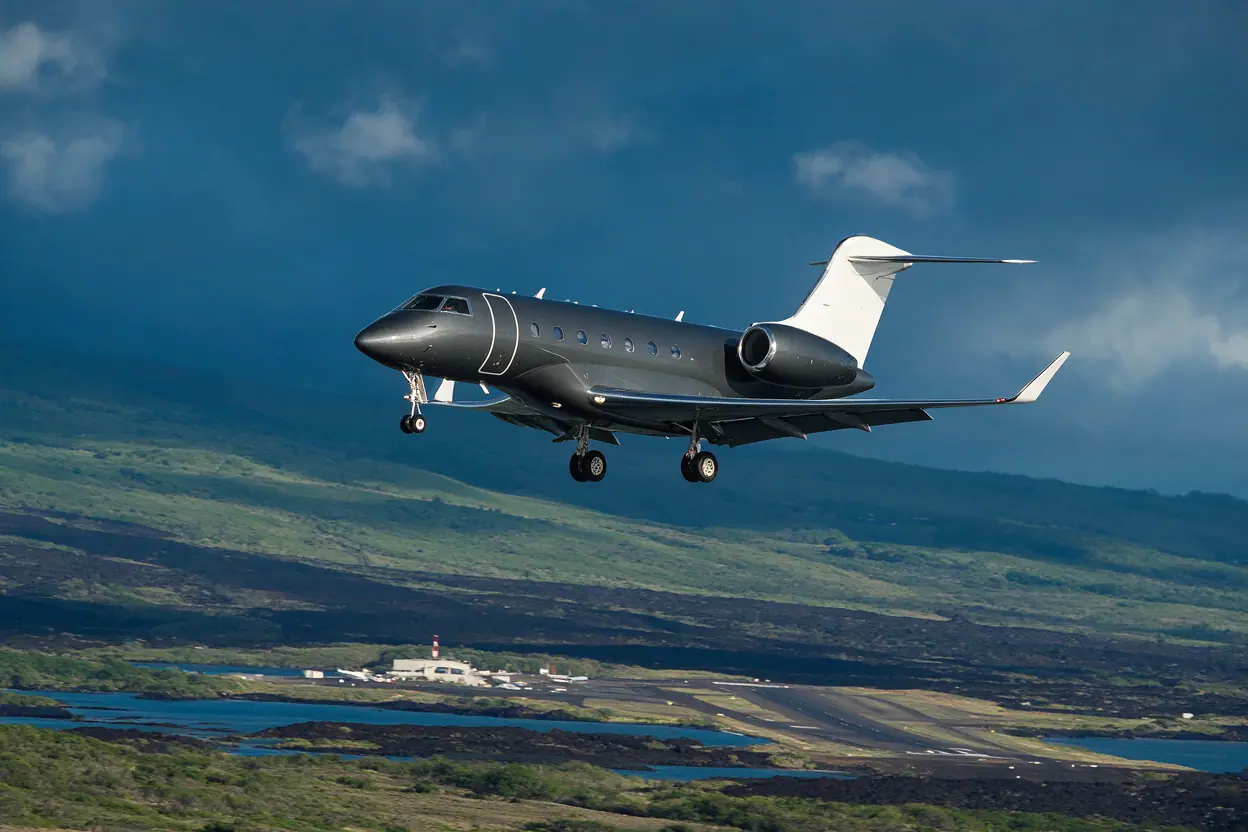
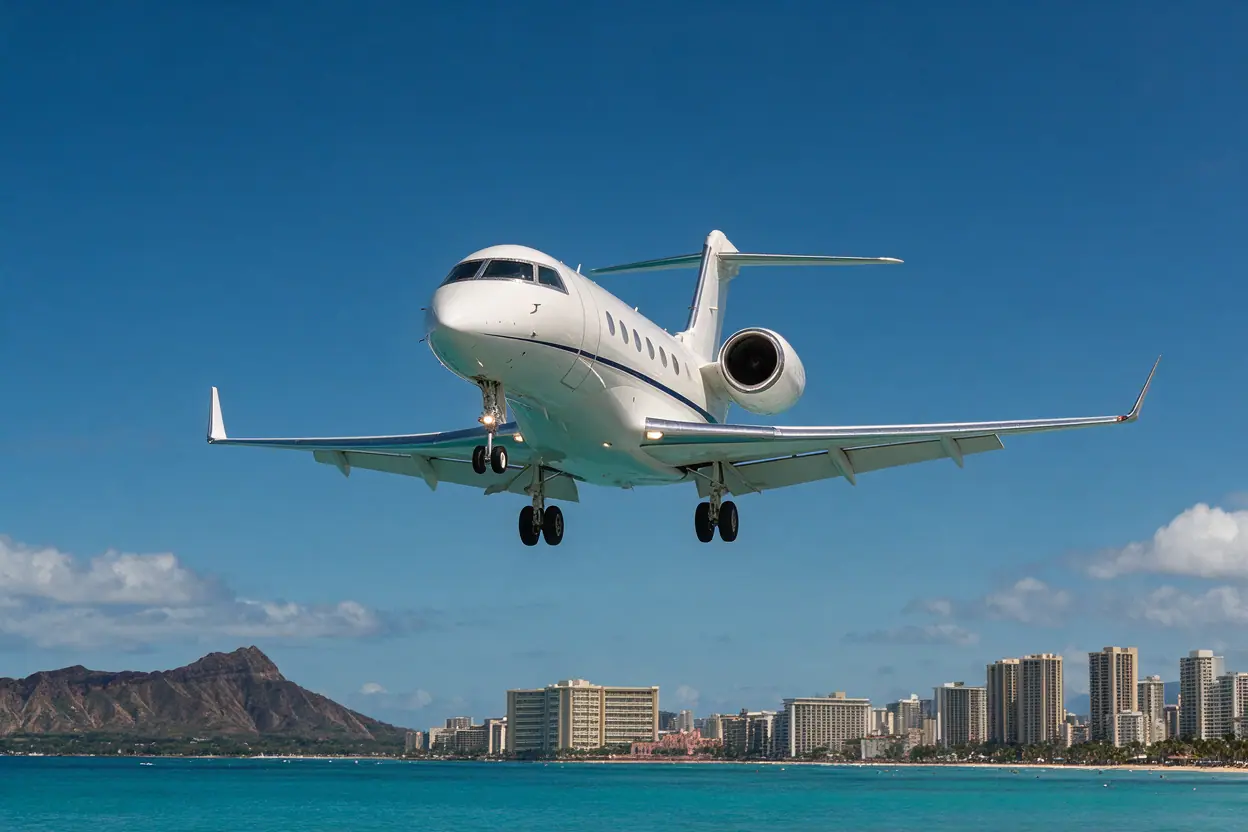
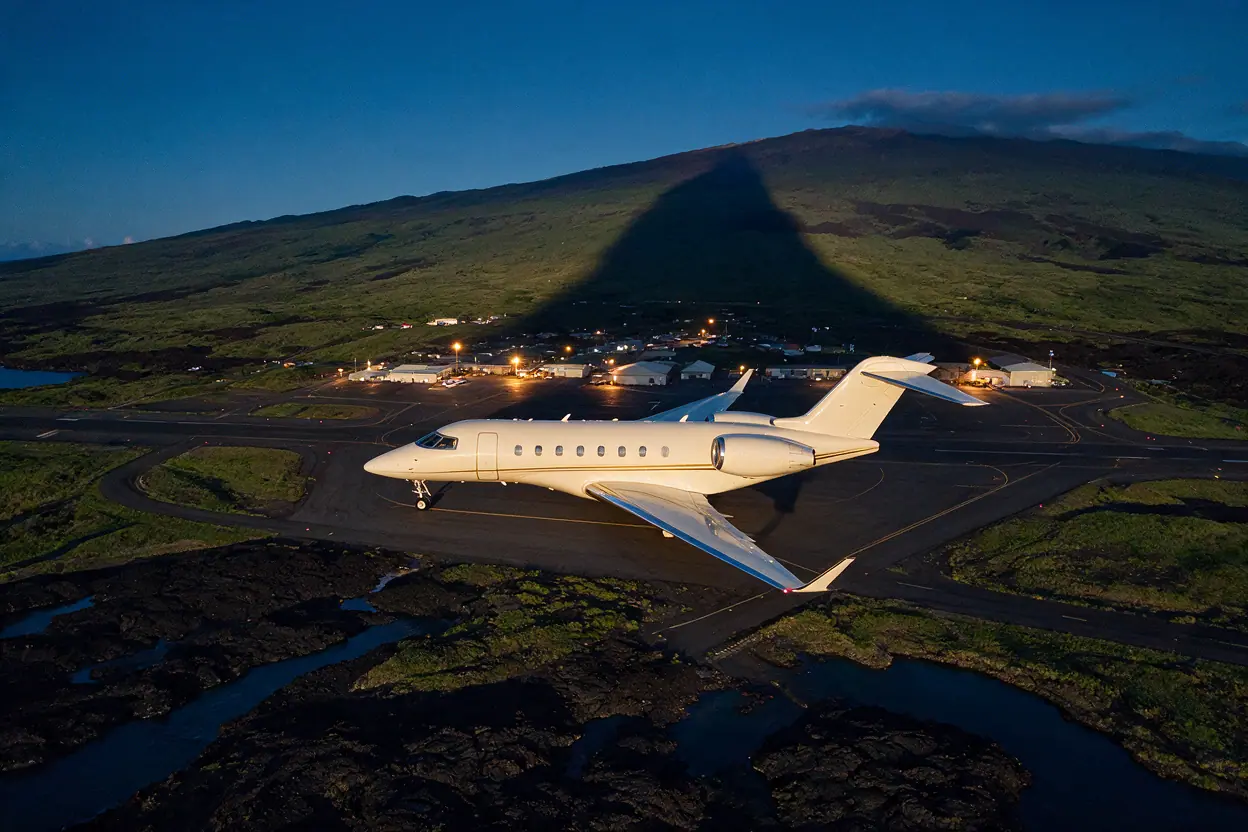
Private jet routes via Ellison Onizuka Kona at Keāhole
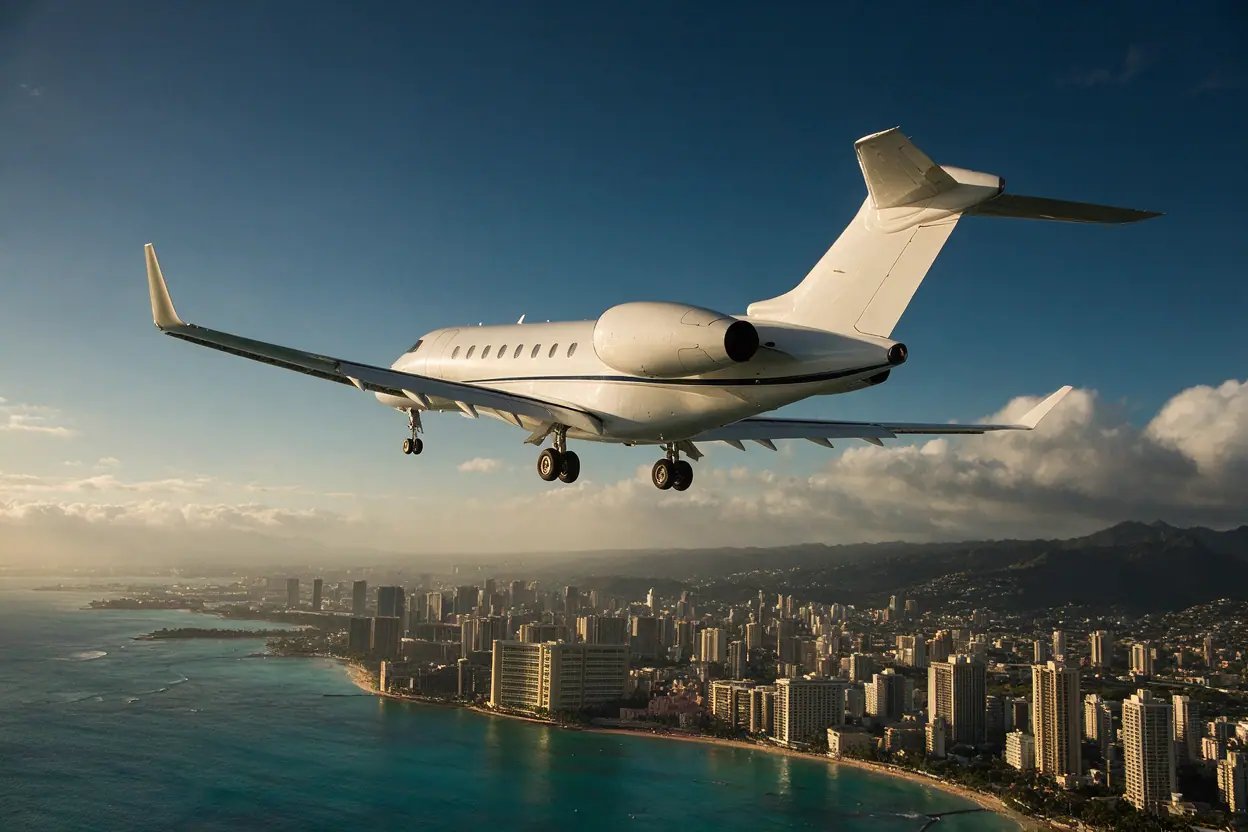
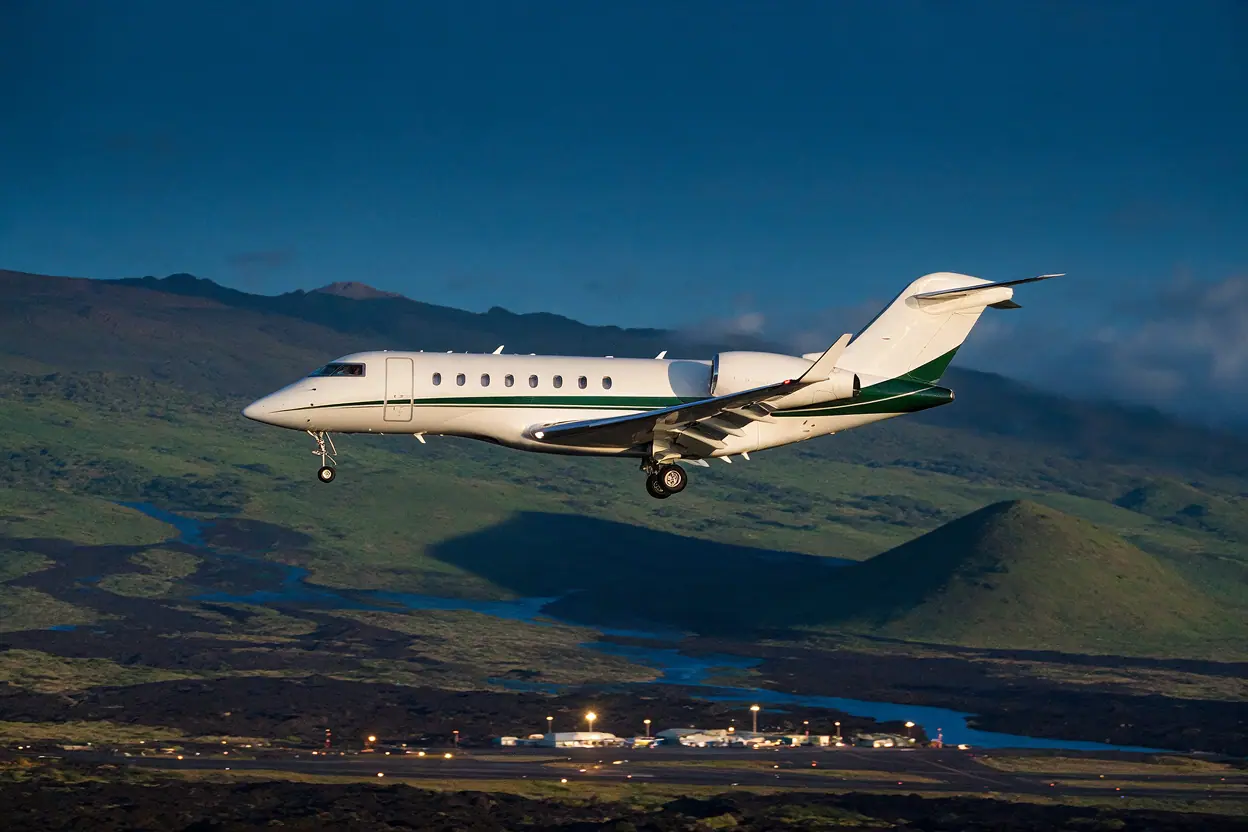
Across these 6 private jet routes, distances span 2,031 to 2,329 nautical miles, and one-way light jet estimates range from $23,000 to $39,000.
Inquiries on this airport
What is the airport code for a private jet Ellison Onizuka Kona at Keāhole flight?
KOA is the IATA code and PHKO is the ICAO code for the same field, Ellison Onizuka Kona International Airport at Keāhole. Both appear on charter quotes and flight plans. The airport sits 47 feet above sea level on the Big Island's west coast, with an 11,000-foot runway that handles mainland nonstops and commercial widebodies alike.
How far is Kona from the mainland for a charter flight?
The field is about 2,714 miles from the mainland gateways that serve it. From Van Nuys the leg is shorter, within nonstop range of midsize and large-cabin jets. Turboprops and light jets generally cannot make that ocean leg, so island aircraft handle the shorter hops between Kona and Maui or Honolulu instead.
Which FBO handles private jets at KOA?
Atlantic Aviation is the fixed base operator on the field and handles general aviation arrivals, fuel, and ground coordination. Because there is a single FBO, ramp space and customs timing can tighten during busy periods. Your charter operator confirms availability before booking, and international arrivals have CBP processing arranged ahead of the flight.
Does heat affect takeoff performance at Kona?
Density altitude peaks near 2,900 feet at 115F and runs about 2,300 feet in July, which is modest thanks to the 47-foot elevation. Large-cabin jets barely notice. Light jets and turboprops see reduced climb performance on warm August departures, so payload and fuel planning matter more for smaller aircraft on this route.
What is the difference between KOA and HNL for a Hawaii charter?
KOA puts you on the Big Island's dry west coast near Kailua-Kona and the Kohala resorts, while HNL is on Oahu and sits about 2,759 miles from the mainland. If your trip centers on Kona or Kohala, arriving at KOA avoids an inter-island hop and a long drive. Travelers splitting time between islands often pair the two.
How does charter pricing to Kona work?
Charter quotes are estimates built from aircraft type, the 2,714-mile leg, crew duty time, and handling at Atlantic Aviation. Prices vary by season, with winter and summer peaks running higher. As a broker, we arrange flights through operators who hold operational control, and we act as your agent under DOT Part 295 rules rather than flying the aircraft ourselves.